

Sixty years ago today (June 25, 1950) the armies of North Korea invaded the Republic of Korea sparking the Korean War. The Korean War set the template for future “hot wars” that the West was going to fight i.e. that we were going to rely on the United Nations and that we were going to impose limits and restraints on our men in the field. Only when the Communists realized that newly elected president Dwight Eisenhower was prepared to use nuclear weapons was an armistice signed. To this day, North Korea is still officially at war with the South as no peace treaty has been signed.
by Arthur Herman
On June 25, 1950, 90,000 North Korean soldiers backed by 150 Soviet-built T-34 tanks poured across the border into South Korea. The Cold War had suddenly turned hot, and America found itself drawn into the longest war in its history.
Vietnam used to claim that dubious title. Now it’s Afghanistan. But the surprise communist invasion 60 years ago today began a Korean war that eventually saw an armistice but still no peace treaty.
Indeed, since major fighting stopped in 1953, more than 90 Americans and 300 South Korean soldiers have been killed in clashes along the DMZ barbed wire between North and South Korea — in addition to the 46 ROK sailors killed by a North Korean torpedo in March.
That summer of 1950 tested America’s commitment to the cause of freedom as never before, not even in World War II. There was no Pearl Harbor, and no American interests at stake in Korea but one: that other peoples should never be enslaved against their will.
The Soviet-backed invasion came just five years after V-J Day. It was the first serious test of America’s post-World War II strength of will and its new strategy of containing communism. Would America step up to protect an impoverished nation so far from any vital shore? Many feared the Truman administration, with its attention focused on Europe, would not.
They were wrong. President Harry Truman got off a plane in Washington and immediately agreed to swift action to save South Korea. He had been thinking about Hitler and Mussolini on the plane, Truman said; this time, the totalitarians would not get away with it. America would send in troops at once.
The problem was, there were no troops — or very few. In 1945, America had spent $50 billion on defense, in 1950 $5 billion. Its 8.25 million-strong military had shrunk to less than 600,000, most of them still in Europe. The Eighth Army’s four undermanned, underequipped divisions would somehow have to stem the massive communist tide, as Gen. Walton Walker fed his troops in piecemeal.
The shortage of manpower also forced the integration of African-Americans into front-line combat units. Indeed, the all-black 24th Regimental Combat Team scored the first American success, on July 20 at Yochen, where Lt. William Bussey became the war’s first African-American Silver Star.
By the end of July, 94,000 US and South Korean troops were clinging to a narrow perimeter around Pusan, at the southern tip of the Korean peninsula. One infantryman from the 34th Regiment remembered: “We stacked our dead around us for protection.” Gen. Walker told his men there was no retreat, because there was nowhere to go. “We must fight to the end.” If they had to die, he said, “at least we die together.”
But they held on, while waves of carrier-borne Navy planes pounded the sputtering North Korean attack. By now, Walker’s men were joined by the British, Canadians, Australians and New Zealanders of the 27th British Commonwealth Brigade, as Truman’s decision to seek support from the United Nations began to kick in — and nations America had liberated in World War II, like Greece and France, stepped up in her support.
To relieve Pusan and reverse the war’s course, Gen. Douglas MacArthur launched his dramatic amphibious landing at Inchon on Sept. 15, and the long slow slog of retaking South Korea began.
Read the rest here: The forever war
On June 25, 1876 – 5 companies of the Seventh U.S. Cavalry Regiment led by Lt. Colonel George Armstrong Custer (he was a Major General only in the Volunteer Army of the Civil War) were killed to the last man at the Battle of Little Bighorn in Montana Territory. The troops were the advance party of three columns that were to converge from the East, West and South on the Sioux and Cheyenne Indians who were believed to be camped somewhere between the Little Bighorn and the Rosebud rivers. The U.S. Government wanted the Sioux to cede the Black Hills to the Untied States primarily because of rumors of gold to be found there. The Black Hills were considered to be sacred to the Indians and most of the Indians rejected the offer and many left the reservations to join Sitting Bull and other chiefs to resist. The fear during the 1876 campaign was not that the Army would be defeated but that the Indians would get away. Custer thought that he would find maybe several hundred warriors instead he struck the village which contained up to 2,000 warriors (there were only 560 or so soldiers in the 7th cavalry). Dividing his command into three parts he retained 5 companies under his direct command and attacked the center of the Indian camp, he was quickly repulsed and his men were strung out on a ridge for over a mile and slaughtered by companies. Gall lead the frontal attack on Custer while Crazy Horse and Two Moon attacked from the flank and rear. The Indians stampeded the soldiers horses (every 4th man held his own horse and the horse of three other soldiers) and by doing so deprived the men of much needed ammunition. The Custer family lost George A. Custer, his brother Captain Tom Custer (commander of C Company), brother-in-law Lt. James Calhoun (commander of L Company), brother Boston Custer (a scout) and nephew Henry Reed. The other two parts of the regiment were divided into battalions led by Major Marcus Reno and Captain Frederick Benteen. Reno attacked the village before Custer did and was quickly stopped, and panicking – he lead his battalion into a retreat across the river and onto a hill in which he was besieged. Benteen arrived after a scout to the left and joined Reno on the hill that now bears his name and none of them arrived to aid Custer. Custer lost 210 men and Reno-Benteen lost around another 40 men killed. This was the worst defeat for the U.S. Army during the Plains Indian Wars. By the way, the Indians did not ride around Custer’s men on horseback but took positions in the high grass and broken ground and fired upon them (some Indians had repeating rifles) and fired great clouds of arrows upon them and it was all over within an hour. Most of the soldiers were scalped and mutilated. The next day the remnants of the 7th Cavalry entrenched on Reno Hill fought off Indian attempts to annihilate them until relieved by General Terry and Colonel Gibbon. Although called “Custer’s Last Stand” the battle really was the Northern Plains Indians Last Stand. The Army pursued them in a winter campaign and chased them into Canada where eventually Sitting Bull, Crazy Horse and Gall all surrendered one by one.
Little Bighorn History and Photo gallery
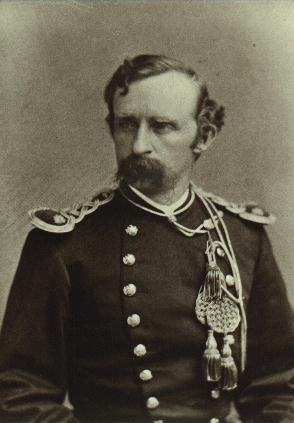
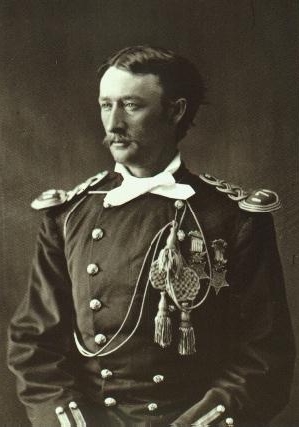
Brothers Lt. Col. George Armstrong Custer (L) and Captain Thomas W. Custer (R), Company C commander
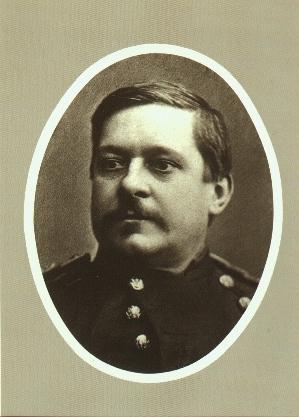
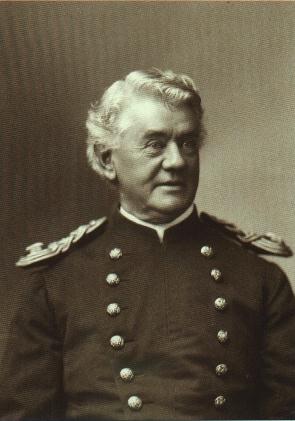
After Custer, the 7th’s two senior officers, Major Marcus A. Reno (L) and Captain Frederick W. Benteen (R)
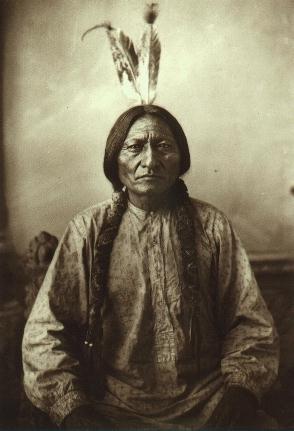
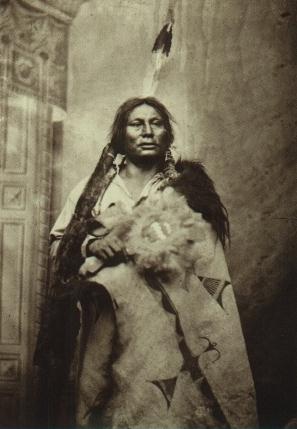
Sitting Bull and Gall. There are no photographs of Crazy Horse.
Tags: Arthur Herman